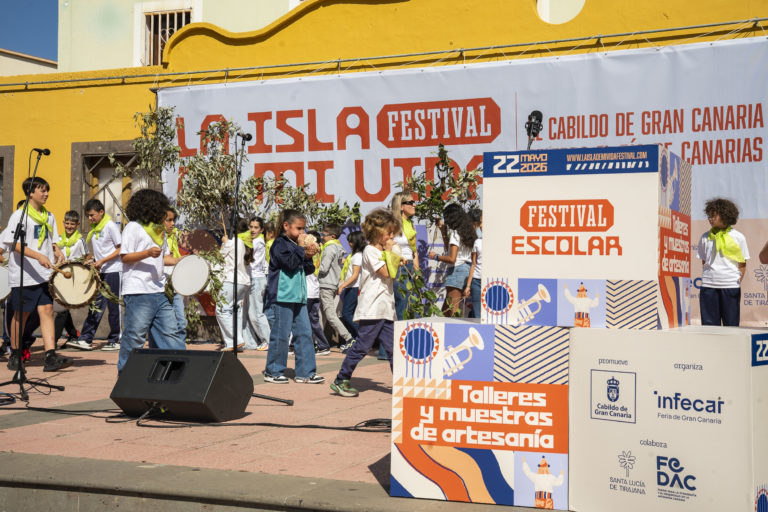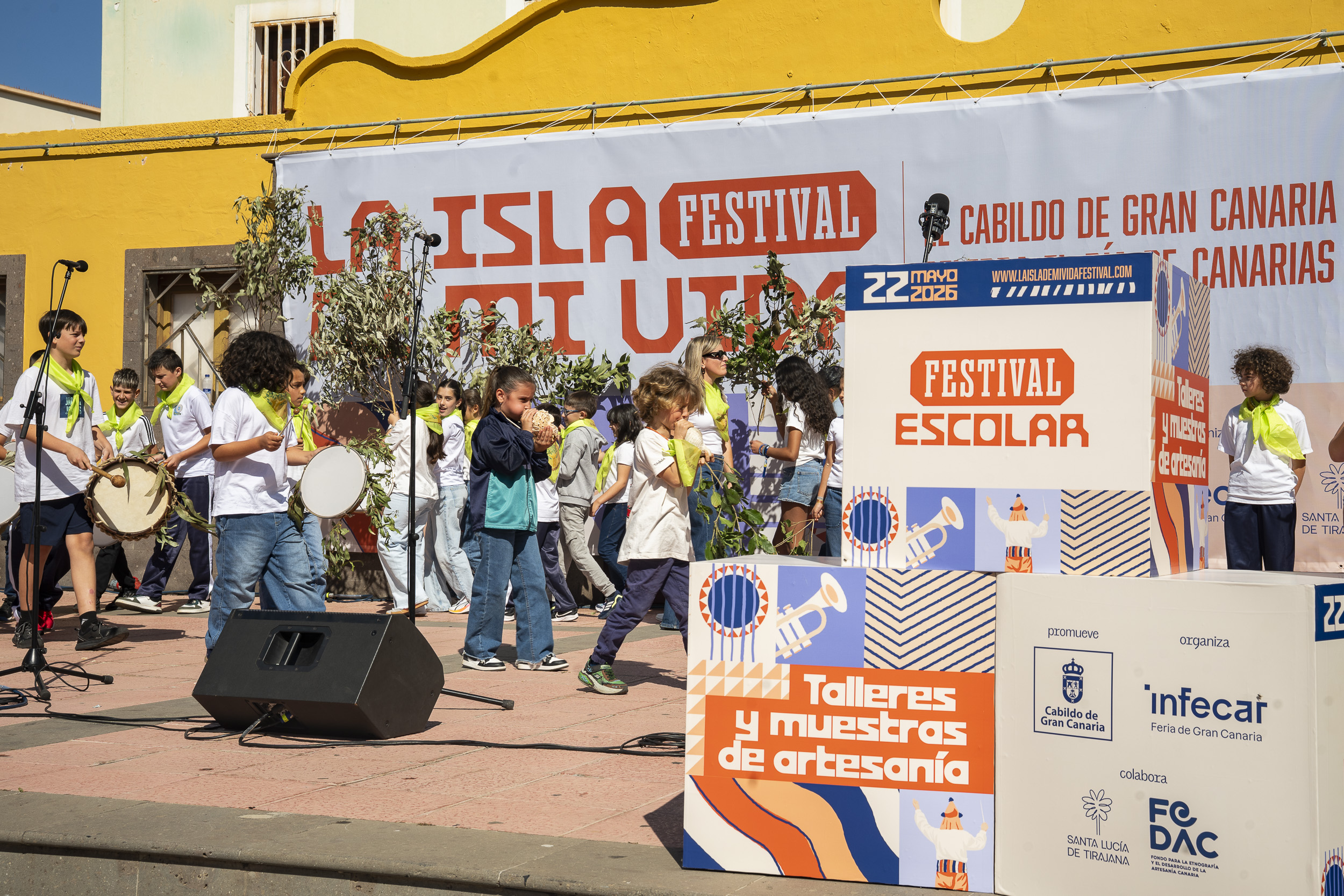
- More than 800 students from across the island performed traditional music this morning in Vecindario after months of rehearsals
- Plough and stone lifting, pottery, shepherd’s leap, whistled language and stick fighting were also part of the day’s programme
- Everything is ready for the major La Isla de Mi Vida Festival event on 29 May in Plaza de Santa Ana, featuring the show Attindamana
Traditional music performed by more than 800 students from 16 schools across Gran Canaria, after months of rehearsals; the strength of tradition through the lifting of ploughs and stones weighing almost one hundred kilos; the sound of whistled language; pottery, drawn-thread work, basketry, shepherd’s leap, branches raised in the air and stick fighting all took centre stage today at the well-attended La Isla de Mi Vida School Festival, held in Plaza de San Rafael in Vecindario.
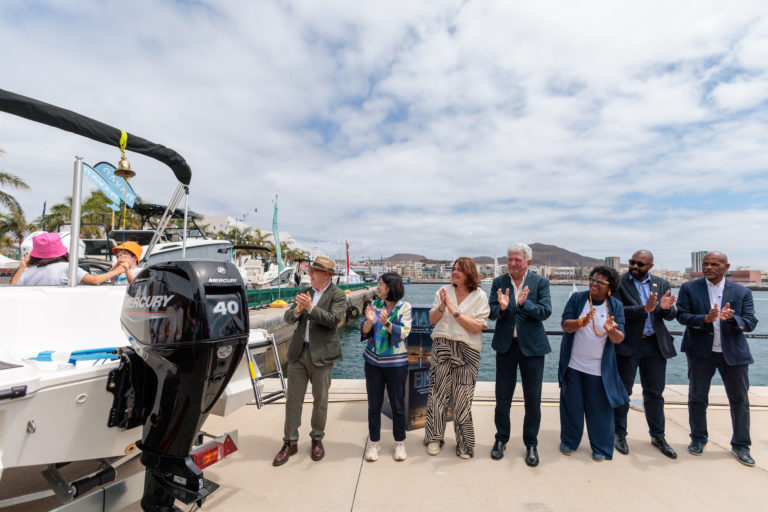
This was the first stop of the Festival La Isla de Mi Vida, promoted by the Cabildo de Gran Canaria, which will culminate with the concert on 29 May in Plaza de Santa Ana, in the island capital. The event was attended by the president of the Cabildo de Gran Canaria, Antonio Morales; the Councillor for Economic Development, Minerva Alonso; and the mayor of Santa Lucía de Tirajana, Francisco García.
“This is the best way to feel and enjoy Gran Canaria and the Canary Islands,” said the island president, Antonio Morales, shortly after listening to a young girl translate the full phrase La Isla de Mi Vida into whistled language, and before touring the different craft stalls located just a short distance from the main stage, where the performances took place.
In the afternoon, the La Isla de Mi Vida Family Festival was also held in Plaza de San Rafael in Vecindario, this time with performances by municipal music schools. This brought the first major event of this year’s edition to a close, with all eyes now turned towards Plaza de Santa Ana.
On 29 May, in Plaza de Santa Ana, Las Palmas de Gran Canaria, with free admission, the programme will begin with a parade at 7:30 p.m. from Parque de San Telmo, featuring the Banda de Firgas and the Papahuevos. At 8:30 p.m., the main highlight of the programme will begin: the musical and theatrical show Attindamana — The sound of a people, the heartbeat of an island.
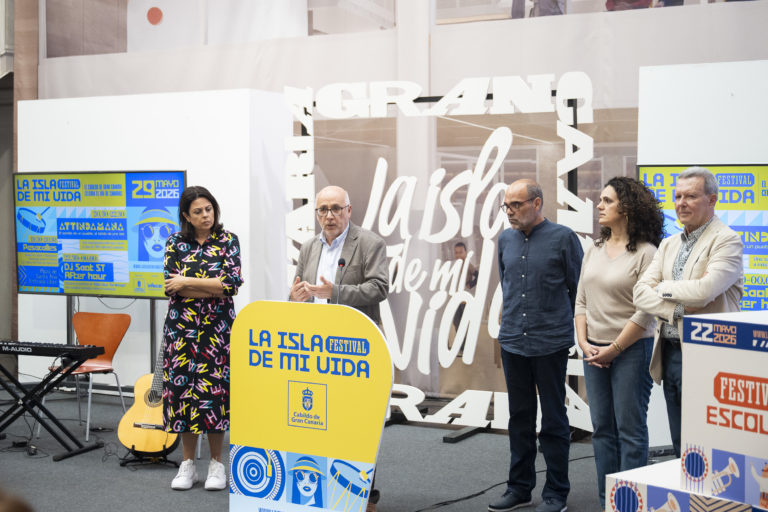
The president explained that Attindamana is a large-scale production involving more than 500 artists and conceived “as a profound and contemporary tribute to the identity of the island’s 21 municipalities”. The project is directed by a collective creative team that works by building connections between different artists. This core creative and directing team includes Mario Vega, Belén Álvarez LAJALADA, Víctor Batista, Ner Suárez, Manuel Abrante, Ruth Sánchez and Javier Cerpa.
“Attindamana stands as an ambitious and determined commitment to a fundamental goal: to create a new and lasting repertoire for Canarian popular music,” Antonio Morales explained. “Beyond a one-off event, it is an investment in future heritage, creating a legacy of 21 songs that will become part of our land’s songbook, adding to the foundations of our popular music so that they may endure and remain alive over time,” he said of this new sound and emotional map.
Ultimately, Attindamana is one of the largest gatherings of local artistic talent linked to an island-wide cultural event. It involves, among others, the Gran Canaria Philharmonic Orchestra, Parranda Araguaney, Umiaya, Mujeres D, Raíces Atlántikas, Los Serenquenquenes, folk groups, municipal collectives and more than forty vocal and instrumental performers.
The night of 29 May will close with the exclusive premiere of the new edition of After Hours: The Mixtape. This project is led by DJ Saot ST, a renowned producer and filmmaker who has devoted his career to promoting young talent from the islands within urban culture.
The president of the Cabildo thanked the teams from the Department of Economic Development, Infecar as the Festival’s organising body, Fedac, the Presidency Department and the production company Una Hora Menos, as well as the more than 500 artists and researchers involved in the initiative, along with the collaboration of the municipalities of Santa Lucía de Tirajana and Las Palmas de Gran Canaria.