- The Electric Vehicle Show surpasses attendance figures from the last five editions, confirming public interest in sustainable mobility
- Efficient driving courses, brand test drives and simulators enhanced the experience for visitors interested in electric mobility
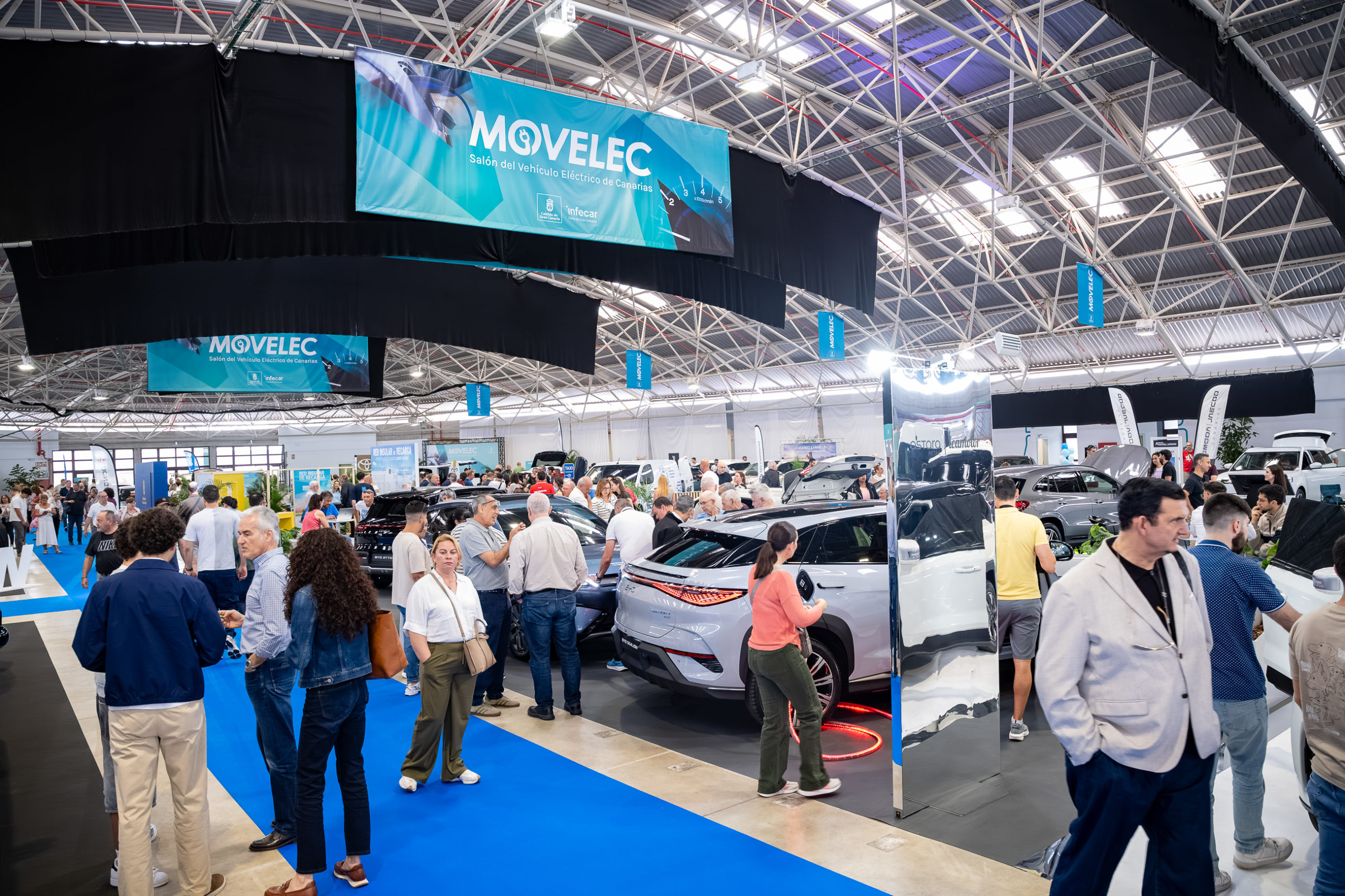
The ninth edition of Movelec, the Canary Islands Electric Vehicle Show, has come to a successful close, surpassing the number of attendees recorded over the past five editions and confirming the public’s growing interest in sustainable mobility.
Nearly 2,500 visitors — a record in recent years — reaffirm “the growing interest of the public in electric vehicles and in a more sustainable way of getting around”, said Raúl García Brink, Councillor for Environment, Climate, Energy and Knowledge. He also highlighted “the satisfaction of exhibitors, who are seeing how this sector continues to grow strongly on our island”. “Gran Canaria is moving steadily towards cleaner, more efficient and more accessible mobility for everyone, and from the Cabildo de Gran Canaria we are supporting this transformation through grants, infrastructure and planning,” he added.
Movelec came to a close today following another efficient driving workshop led by Samuel Sánchez, an electric vehicle specialist, and Carlos Larrodé, manager of the Canary Islands School of Efficient Driving, who shared tips and recommendations with attendees on how to save resources when driving electric vehicles.
Álvaro Sauras, Vice-President of AUVE, President of ASEPA’s Innovation Commission and director of *Autofácil*, closed the programme of talks for this ninth edition of the motor show with a presentation on flash charging — ultra-fast charging that can be completed in under 10 minutes — as well as the different types of chargers and charging methods available.
Saturday’s programme ended with a talk by Jorge Cristóbal Román, a content creator specialising in electric mobility and a taxi driver in Madrid, who addressed taxi electrification in Spain, describing it as “still very low”, with the northern provinces being the most electrified. Román spoke about the advantages of electric vehicles for taxi professionals, including “savings on fuel and maintenance costs, as well as the comfort and spaciousness of the vehicles”. He also referred to some of the most common concerns surrounding electrification, including the lack of charging points and battery durability.
Román highlighted the public grants available in the Canary Islands for the acquisition of electric vehicles for the taxi sector and concluded his talk by encouraging taxi professionals to make the switch to electric cars: “Buy one — it’s just a matter of sitting down and doing the maths.”
The Madrid taxi driver’s talk was followed by a round table entitled *Taxi Electrification in Mainland Spain and the Canary Islands*, featuring Román, Canary Islands taxi driver Paco Reyes, and Albano Castillo, director of Astara Icamotor. Together, they reflected on topics including the best charging options, battery range, vehicle power, maintenance and fuel savings, the recycling of 96% of vehicle components, and the grants offered by public administrations.
The conclusion of the debate was clear and unanimous: “Taxi electrification is not the future, it is a solid and proven reality,” in the words of Paco Reyes. Román reinforced this idea by stating that “every day that goes by without you having an electric taxi is a day you’re losing money,” while Albano was even more emphatic, saying that “there is no argument for taxis not to be one hundred per cent electric; one hundred per cent of taxis in the Canary Islands should be one hundred per cent electric.”
A similar view was expressed by the speakers in the round table on electric mobility in the Canary Islands: Arturo Lang-Lenton, from icanCharge; Roberto Amorín, from Canary Charger; and Carmelo Santana, from the Electric Vehicle Users Association (AUVE), for whom “electric mobility starts at home”, since having the option to install a charger at home also makes the move to an electric car easier. The experts focused the debate on charging infrastructure and underlined the lack of awareness around the individual right to install charging points in residential buildings.
In addition to the programme of talks and round tables, visitors were able to learn about the main public grants available for the purchase of electric vehicles, as well as the latest developments in the industry, represented at Movelec by around twenty companies, 14 car and motorcycle brands, and 9 additional related service providers, including charger suppliers and workshops.
Over the weekend, visitors also enjoyed practical driving courses, the now traditional test drives from participating brands, and driving simulators, all of which enhanced the experience for those interested in electric mobility who visited the Agüimes Exhibition Centre during the event.
Promoted by the Cabildo de Gran Canaria and organised by Infecar, Feria de Gran Canaria, Movelec is sponsored by the Island Energy Council, with the collaboration of Cajasiete, the Agüimes Town Council and the Electric Vehicle Users Association (AUVE).